Impact of Epilepsy
The physical, emotional, and cognitive consequences of seizures can build over time–affecting patients’ daily lives.

The physical, emotional, and cognitive consequences of seizures can build over time–affecting patients’ daily lives.
Patients have a lot to lose with just 1 seizure
When seizures remain uncontrolled, patients are1*:
more likely
to have
depression
more likely to
be prevented
from driving
more likely to
experience
limitations in
employment
more likely
to have
limits in
education
1 in 4 patients have accepted a reality of living with seizures for the rest of their lives—it’s time to reframe the conversation about what the newer generation of anti-seizure medications (ASMs) can offer.
Source: Hope, Hesitancy, and Hard Truths: A Patient and Provider Perspective on Epilepsy Treatment, a 2025 online survey of 450 healthcare providers and 500 US patients with epilepsy.
Epilepsy is associated with various comorbidities2
Patients with uncontrolled seizures have an increased risk of comorbidities.†‡

Cardiac and Metabolic
1.5-2x
more likely to have atrial fibrillation (AFib)

Neuro-psychiatric
3x
more likely to have non-epileptic seizures

Neurologic
1.5-2x
more likely to have
brain trauma
1.5-2x
more likely to develop dementia/Alzheimer’s
1.5-2x
more likely to have a stroke
UP TO
9.3
deaths per 1000 person-years in patients with refractory epilepsy3
30x
Secondary generalized tonic-clonic seizures put patients at a 30x higher risk for SUDEP compared with other seizure types4
Hear expert recommendations on the SUDEP patient conversation
Selim Benbadis, MD, speaks to the importance of overcoming complacency in drug-resistant patients and why discussing the risk of SUDEP with patients and caregivers is a critical conversation to have.

Patients with seizures have an increased risk of SUDEP5§
SUDEP=sudden unexpected death in epilepsy.
Many patients have a history of being let down
During the past 3 decades, despite new ASMs coming to market, seizure freedom rates have remained nearly the same.6,7¶
Rates of ZERO SEIZURES by decade of approval for a range of ASMs8#
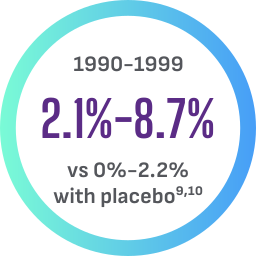
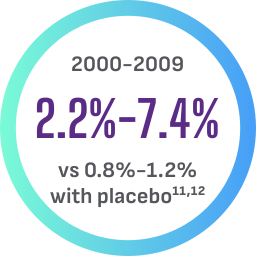
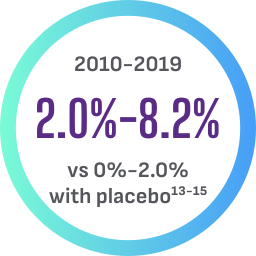
Prior to the 1990s, there was little information on seizure freedom rates with ASMs used as add-on therapy—and even less information about how these rates were determined.8

Powerful efficacy
XCOPRI provides proven seizure reduction and a chance for zero seizures
Explore XCOPRI efficacy
10+ years of clinical trial and real-world experience
Well-established safety & tolerability, with over 325,000 patients treated worldwide16||
Review safety profile